
For Businesses
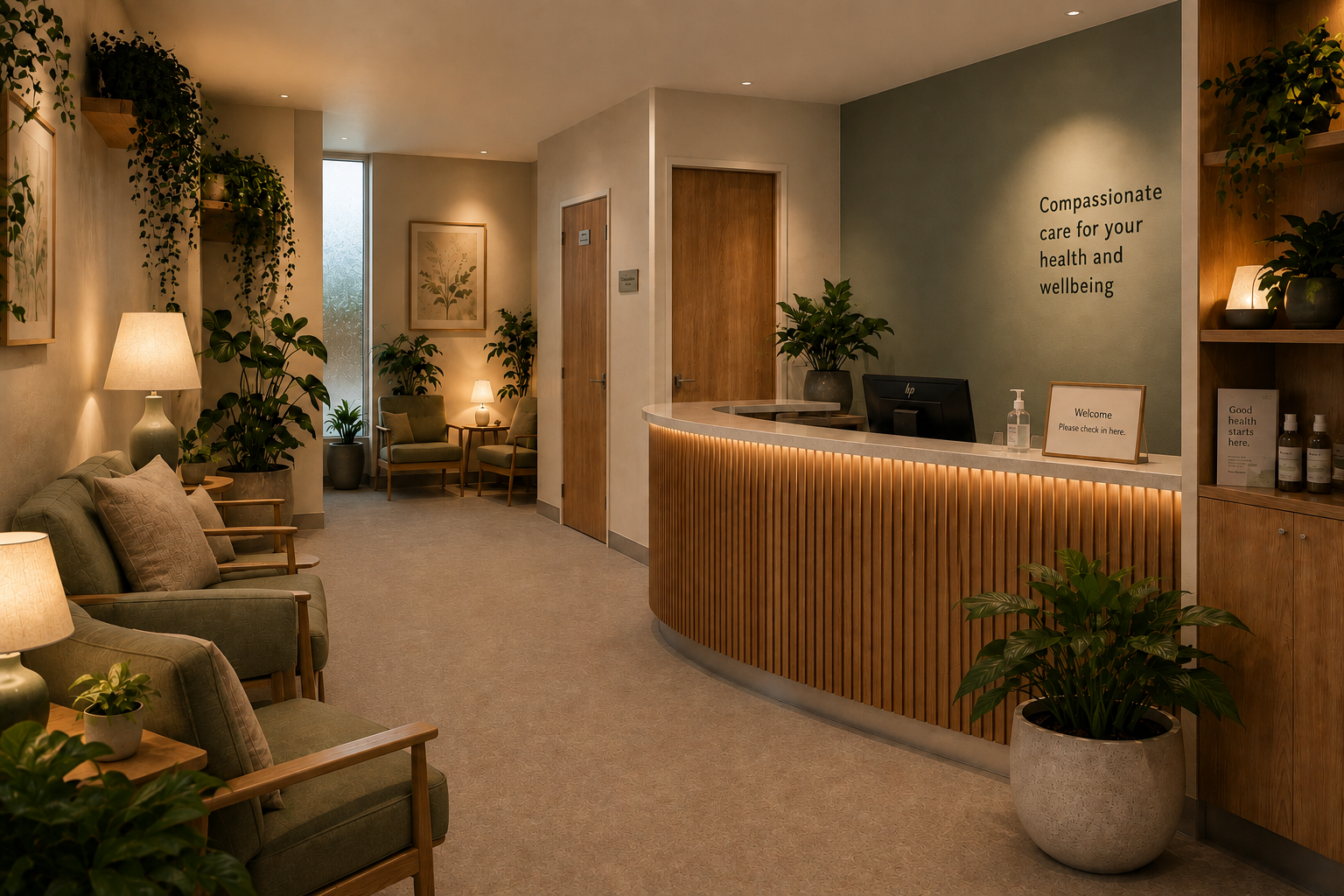
The same sensory lens, for your reception, waiting area.
Clinics, GP practices, psychologists' offices, and NDIS/disability providers see people at their most overwhelmed. This is equity by design: styling for the most sensory-sensitive or dysregulated person as the baseline means everyone benefits, clients and staff alike. Practical, low-cost changes softer lighting, decluttered walls, comfortable seating, reduced noise, a quiet corner make a real difference, and none of it requires structural changes to your space.
Why is this important
Emerging research on the built environment identifies features like lighting, layout, sound, and colour that directly shape how autistic individuals experience and navigate a space, with clear recommendations for designers and policymakers. It also calls for people with lived experience of sensory processing differences to be genuinely involved in the design process itself, not just consulted after the fact.
Yet none of this translates into an agreed, practical standard for what a sensory-inclusive space should actually look like, which is exactly where the legal picture matters. There is also a genuine legal driver: reasonable adjustment requirements under the Disability Discrimination Act 1992 (Cth). Under Section 4, an adjustment is "reasonable" unless it would impose "unjustifiable hardship," a deliberately flexible test rather than a fixed standard, meaning there's currently no defined benchmark for what a genuinely sensory-inclusive space actually looks like.
While structural, built-environment change is the gold standard and something to work towards, it can be costly and time-consuming. Sensory styling, on the other hand, can create more sensory-inclusive spaces for autistic and neurodivergent people through simple styling alone, no renovation, no construction, at a fraction of the cost and styled in less than a day. Just intentional choices in what fills a space and how it's arranged, by someone with both the professional and lived experience as late identified autisticwomen.
References
Black, M. H., McGarry, S., Churchill, L., D'Arcy, E., Dalgleish, J., Nash, I., Jones, A., Tse, T. Y., Gibson, J., Bölte, S., & Girdler, S. (2022). Considerations of the built environment for autistic individuals: A review of the literature. Autism, 26(8). https://journals.sagepub.com/doi/10.1177/13623613221102753
Disability Discrimination Act 1992 (Cth), s 4. https://www.austlii.edu.au/cgi-bin/viewdoc/au/legis/cth/consol_act/dda1992264/s4.html
Morphett, A., et al. (2021). Substances and Your Senses: The sensory patterns of young people within an alcohol and drug treatment service. Substance Abuse, 42(4), 998–1006. https://acquire.cqu.edu.au/articles/journal_contribution/Substances_and_your_senses_The_sensory_patterns_of_young_people_within_an_alcohol_and_drug_treatment_service/19142810
Sensory stimuli in the built environment for autistic people: A scoping review. (2026). https://www.sciencedirect.com/science/article/abs/pii/S0360132326000776